The Great Smoky Mountains Firefly Viewing Lottery
Tickets · Tennessee ·
Managed by the National Park Service
Great Smoky Mountains National Park (National Park) · Open Access
- 2,193 ft
- Elevation

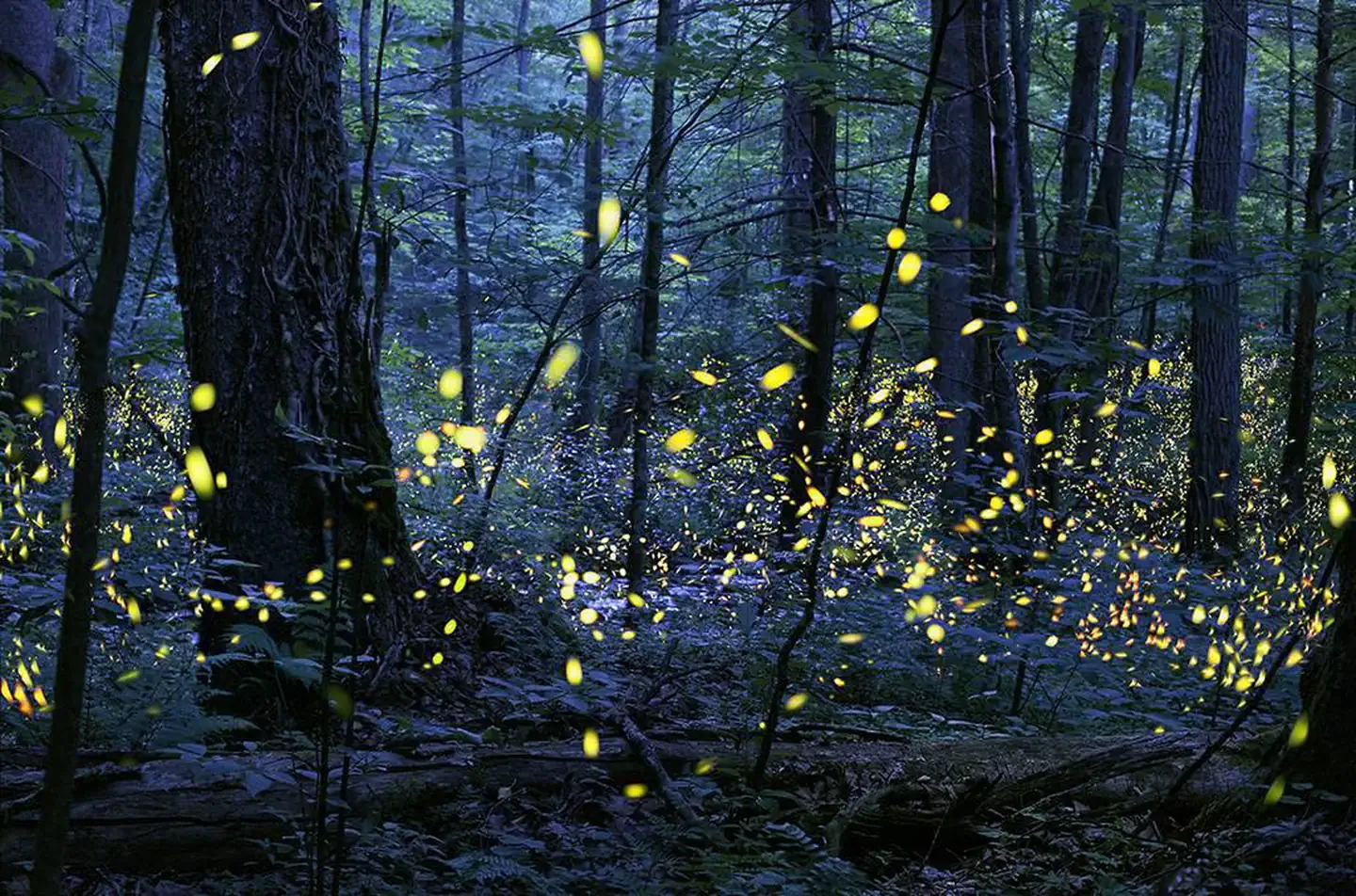
Synchronous fireflies ( Photinus carolinus ) are one of at least 19 species of fireflies that live in Great Smoky Mountains National Park and one of only a few species in the world known to synchronize their flash patterns. This insects' reproductive display occurs for a couple of weeks every year throughout its range (southern Appalachians), and is typically in late May or early June in the Elkmont area of the park. Synchronous fireflies occur throughout the southern Appalachian region, and large populations of synchronous fireflies occurs in Great Smoky Mountains National Park.
The park will organize the viewing area by managing vehicle access. Visitors who wish to view the fireflies must acquire a parking pass via lottery to park in these areas. The number of parking spaces is limited. During the 8-day managed period, Little River and Jakes Creek Trailheads will be closed at night to all but permitted vehicles and foot traffic from registered campers in Elkmont Campground. Visit the park's Synchronous Fireflies web page for additional information about the viewing opportunity.
Important Dates
- Check back later for information on when this lottery will open again.
Getting there
From Gatlinburg, Tennessee, travel 1.7 miles south on US Hwy 441, then turn right onto Fighting Creek Gap Road at the Sugarlands Visitor Center. Travel 4.9 miles west, then turn left onto Elkmont Campground Road and travel 1.5 miles to the intersection near the Campground kiosk. This intersection (Elkmont Rd and Little River Rd) is the check in location to the viewing area.
35.65333, -83.57750 · 35°39'12.0"N 83°34'39.0"W
Typical weather
Typically 83°F in Jul, down to 47°F in Jan.
| Jan | Feb | Mar | Apr | May | Jun | Jul | Aug | Sep | Oct | Nov | Dec | |
|---|---|---|---|---|---|---|---|---|---|---|---|---|
| High °F | 47 | 51 | 59 | 69 | 75 | 80 | 83 | 82 | 78 | 69 | 58 | 50 |
| Low °F | 27 | 29 | 35 | 42 | 51 | 59 | 63 | 62 | 56 | 44 | 34 | 29 |
| Precip in | 4.8 | 4.3 | 5.6 | 4.9 | 5.5 | 6.0 | 6.3 | 4.4 | 4.3 | 3.2 | 4.0 | 4.9 |
1991–2020 averages from the nearest NOAA station, 3.3 mi away — not measured at the facility itself, and elevation can make a real difference over that distance.
Map
More photos
Member photos
Common questions about The Great Smoky Mountains Firefly Viewing Lottery
- Can you reserve a site at The Great Smoky Mountains Firefly Viewing Lottery?
- Yes, The Great Smoky Mountains Firefly Viewing Lottery is reservable through Recreation.gov.
Camping near The Great Smoky Mountains Firefly Viewing Lottery
- Spence Cabin less than 0.1 mi · Campground · we watch it
- Archived Firefly Event Lottery less than 0.1 mi · Permit · we watch it
- Appalachian Clubhouse 0.2 mi · Campground · we watch it
- Elkmont Campground 0.5 mi · Campground · we watch it
- Elkmont Group Camp 0.7 mi · Campground · we watch it
- Metcalf Bottoms Picnic Pavilion 4.4 mi · Campground · we watch it
- Twin Creeks Picnic Pavilion 4.8 mi · Campground · we watch it
- Clingmans Dome Solar Eclipse Event August 21 2017 8.1 mi · Tickets · we watch it
- Appalachian Trail Thru Hiker Permit 3.2 mi · Activity pass
- Sugarlands Visitor Center 3.2 mi · Facility
- Great Smoky Mountains National Park Parking Tag 3.3 mi · Activity pass
- Kuwohi Visitor Center 8.1 mi · Facility
Contact
- Phone 865-436-1261
- Email Dawn_Pekarchick@nps.gov
- Book Recreation.gov
Recreation.gov last updated this record on 2026-02-25.
Facility information and photographs from Recreation.gov (RIDB). SpotOpened is not affiliated with Recreation.gov or any federal agency.
Comments